
Fixed Rate vs Adjustable Rate Mortgage: Payment Changes and Risk
A fixed-rate mortgage can simplify budgeting while an adjustable-rate loan may have a different starting rate and later uncertainty.
Read adjustment structure
Review initial fixed period, index, margin, adjustment frequency and caps for an ARM.
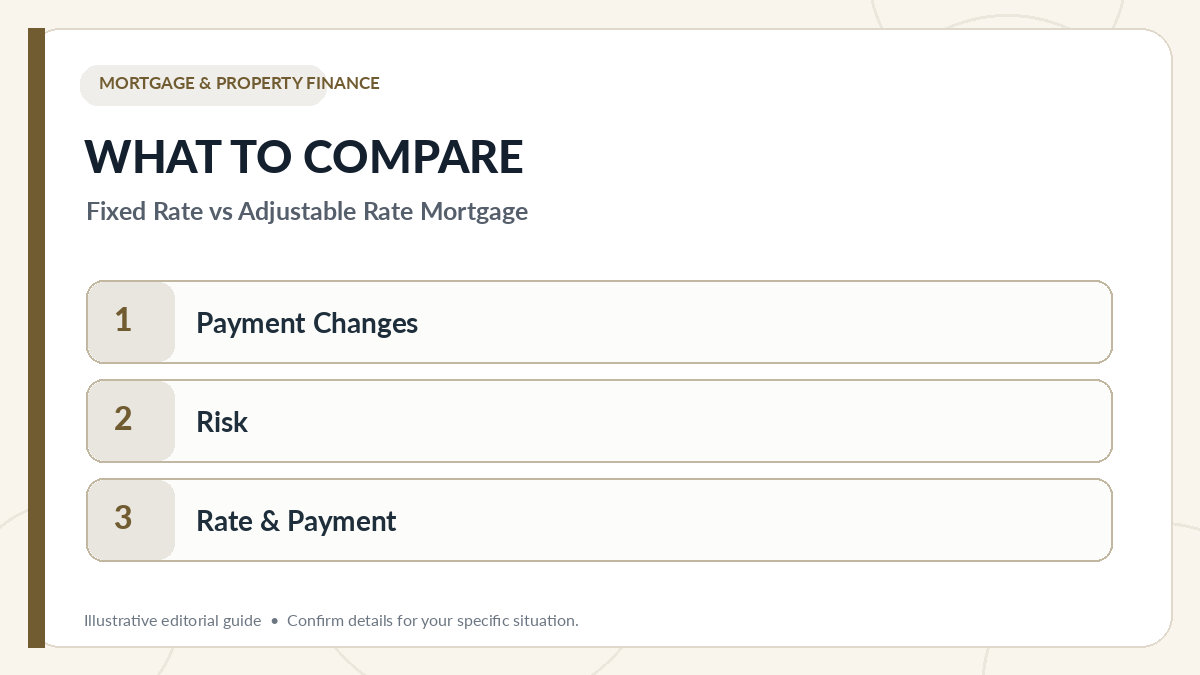
Stress-test payment
Calculate whether the household could afford payments if rates reach a contractually permitted higher level.
Consider holding period
A borrower planning to sell soon faces different exposure than someone seeking long-term stability, but plans can change.
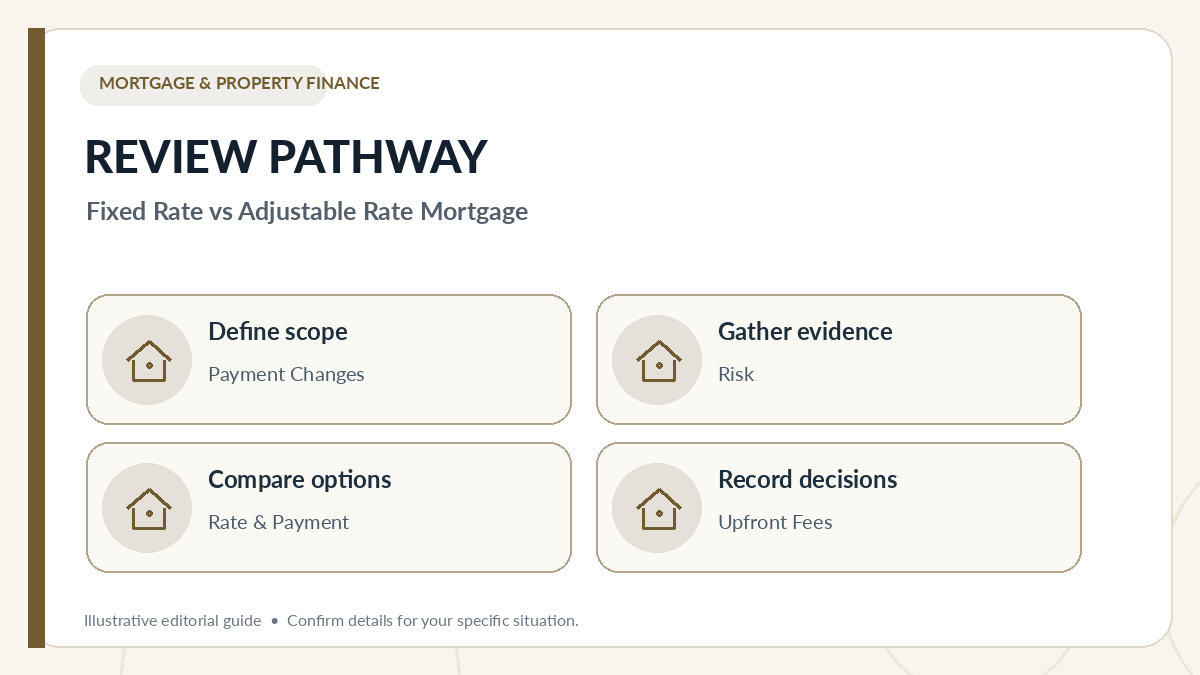
Compare finance on the whole-life cost
Look beyond the introductory rate or monthly amount. Calculate deposit, fees, ongoing interest, repayments, required insurance, tax, penalties and the risk of a property-value change. Financial products, tax provisions and consumer disclosures differ across countries. A licensed local professional can interpret the precise agreement.
Questions to discuss before proceeding
- What is the full amount borrowed and when does the interest rate change?
- Which upfront fees and ongoing charges are included in the comparison?
- What would repayments look like if rates or income change?
- What happens on early repayment, sale, refinancing or missed payment?
Frequently asked questions
Is the lowest monthly payment always the cheapest option?
No. A longer loan, higher fee or changed rate may increase total repayment.
Are advertised mortgage rates guaranteed?
No. Qualification, credit, property and market conditions affect actual offers.
Further reading and source documents
Related guides
- Mortgage Points vs Lender Credits: Upfront Cost and Long-Term Savings
- Construction Loan vs Renovation Finance: Draws, Inspections, and Fees
Editorial note: General financial education only, not a loan offer or personal recommendation. Verify current contract terms and suitability.
Total cost of borrowing: A practical verification process
Compare offers of the same loan type, term, deposit and closing date. Interest rate alone does not capture origination fees, points, insurance, taxes, escrow or early-exit provisions. The written disclosure and realistic affordability under adverse scenarios matter more than a low headline instalment.
Compare no fewer than two relevant written offers or assessments when the decision is expensive or consequential. Check the exact work, itemisation, authorisation, exclusions, follow-up responsibility, and which evidence supports the final recommendation. A professional conclusion should be grounded in the particular property, contract or patient circumstances.
How to interpret costs and estimates
An amount advertised online is not an authoritative local quotation. A usable estimate identifies the jurisdiction, date, scope, condition, materials, professional work and allowances. Ask providers to separate required work from optional upgrades and to state what happens if hidden defects, new information or changing circumstances increase the price.
Regional considerations
Readers in the United States, United Kingdom, Canada, Australia, Germany and the Netherlands must verify local requirements. Prices, insurance rules, licencing, professional standards, rebates and terminology are not interchangeable across countries.
Independent resources
For background and updates, consult CFPB: Comparing Mortgage Loan Offers and CFPB: Loan Estimate Explainer. These resources do not replace the applicable local rules or advice from a qualified professional.
Editorial notice: This article is a general educational guide. Its information should be checked for current rules and relevant facts before publishing; it is not a personalised medical, legal, insurance or financial recommendation.